
Home Addition Cost in Toronto, 2026 Breakdown

If you have outgrown your Toronto home but love the street you live on, a home addition is usually the smartest move you can make. The first question almost every homeowner asks is the same: what will it actually cost? It deserves a straight answer, not a range so wide it tells you nothing.
At Waterfront Home Improvements, our in-house building designers bring more than 15 years of design-build experience across the city. We run every project through our 4-step process under one roof, so the people who price your addition are the same people who design, permit, and build it. That matters for cost, because the budget you see at the start is the budget we stand behind at the finish.
Below is a 2026 breakdown of what Toronto home additions cost by type, by size, and by the professional fees most homeowners forget to plan for. The numbers are directional, drawn from real projects we have quoted and completed this year. Every property is different, which is why the final step is always a site visit.
Cost by Addition Type
The three most common home additions in Toronto each come with their own cost logic. Knowing which one fits your lot and your goals is the first conversation to have.
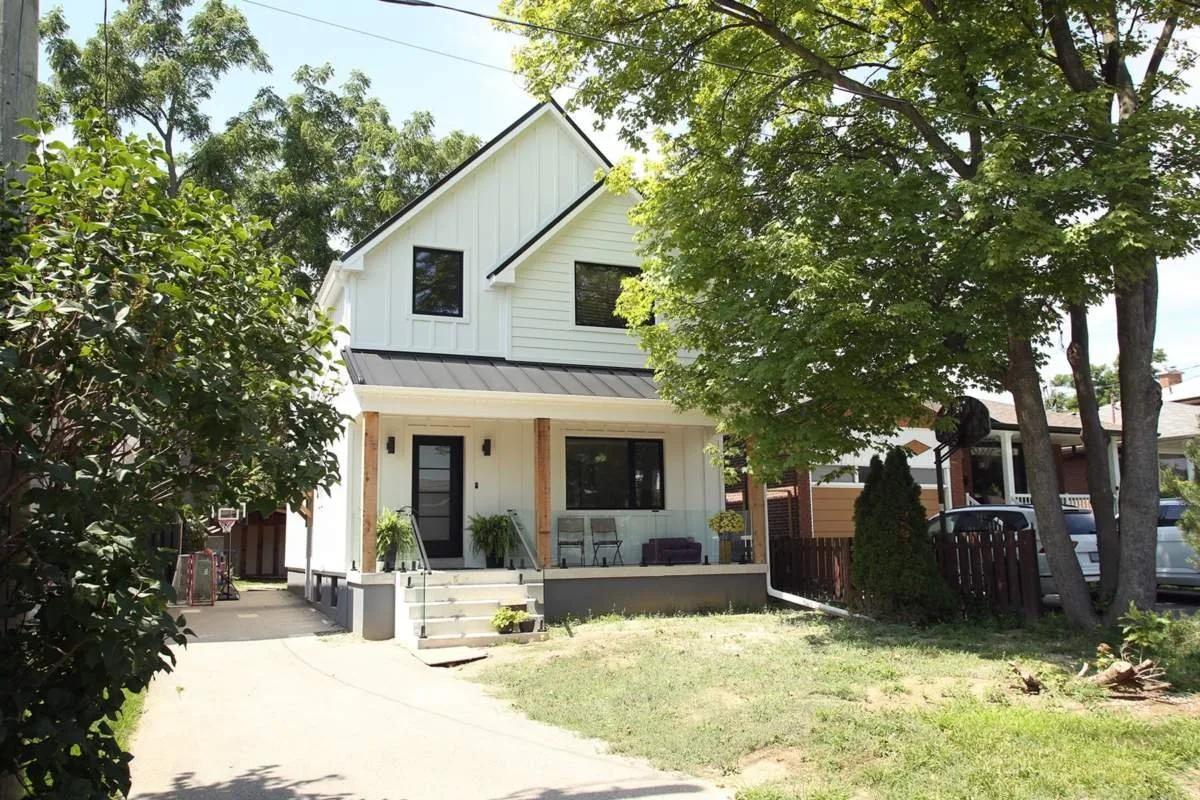
Second storey additions
Adding a full second storey is the most square footage you can buy on a typical Toronto lot without losing any yard or driveway, and it is generally the most cost-efficient way to add square footage in Toronto. The work involves framing a full storey and putting the house back together with matching exterior finishes. The Ontario Building Code requires engineered structural drawings prepared by a professional engineer before a permit issues. The upside is significant: a well-executed second storey can add three or four bedrooms, a primary suite, and a second bathroom, often doubling the usable interior of a bungalow.
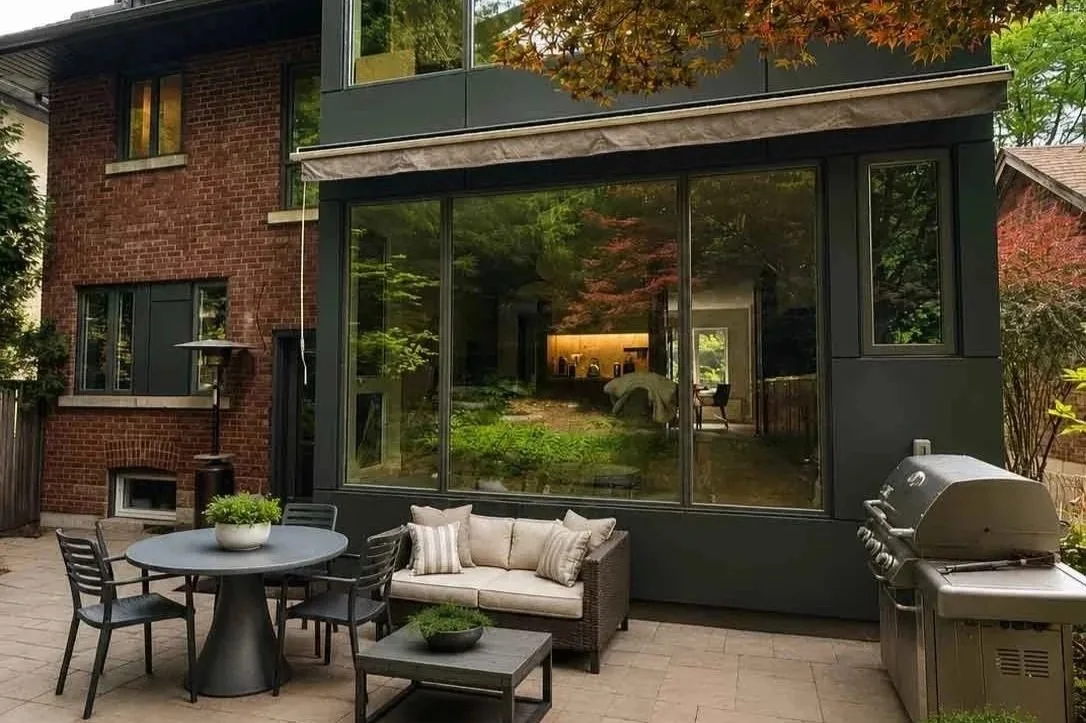
Rear extensions
Rear additions can rarely be designed or built without affecting the existing main floor layout and often cause a need for reconfiguration of the existing space. A rear addition can be a great option if we are looking to add a self-contained space, like a bedroom or living room, or enlarge the kitchen already located at the rear of the house.
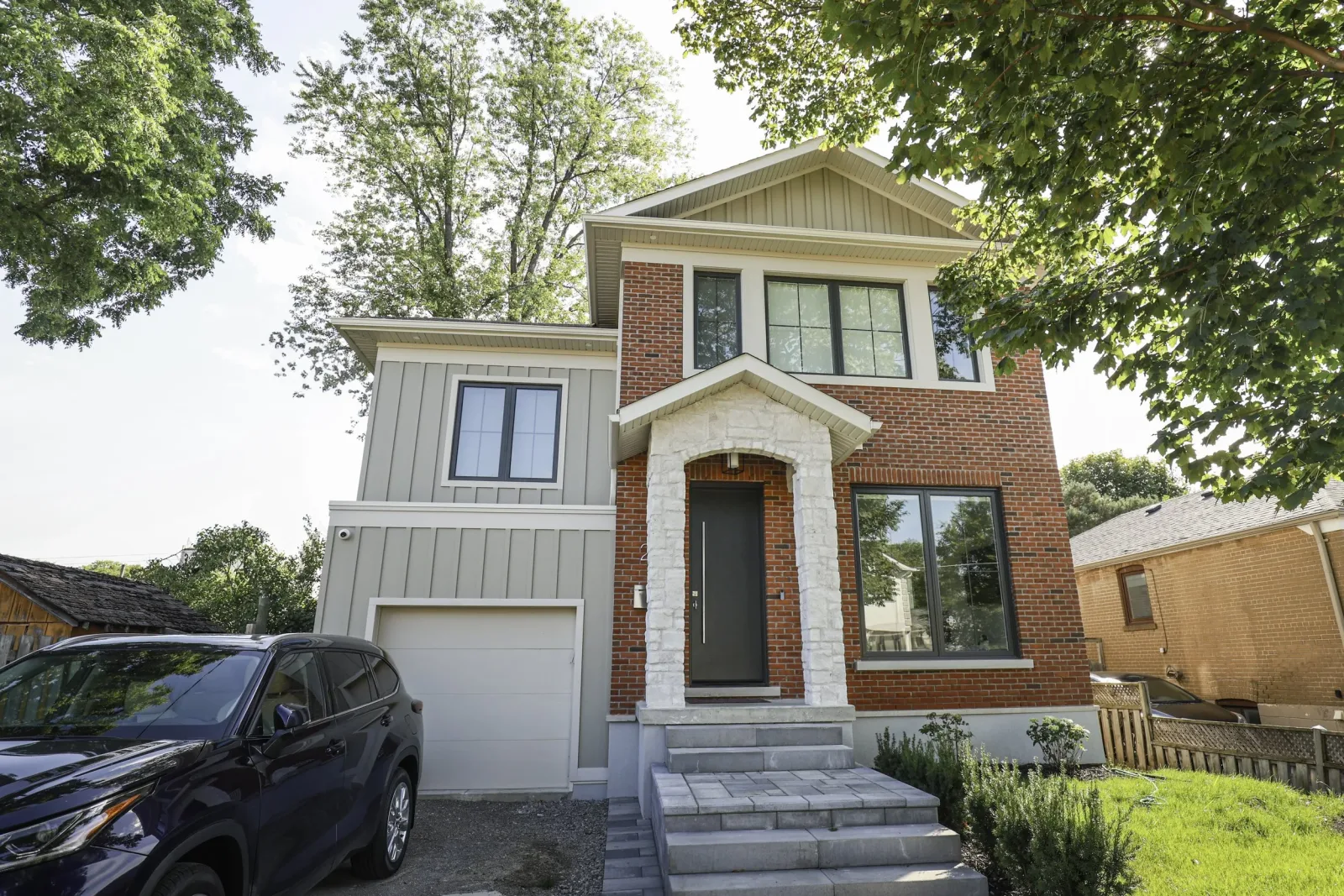
Side builds and ground-floor additions
Side builds work on wider lots where zoning and neighbouring property lines leave room, and are often paired with a rear extension to create a larger L-shaped main floor. Costs per square foot tend to land between a rear extension and a second storey. In semi-detached and row-house configurations a true side build is rarely possible, so most clients on narrower lots choose a rear extension or go up instead of out.
Every one of these options has a right fit and a wrong fit. Part of our job in the early consultation is to tell you which is which for your specific house.
Cost by Square Footage
A common question we hear is, “What does a home addition cost per square foot in Toronto?” In practice, per-square-foot pricing is useful for back-of-envelope planning, not for a final decision. A 400 square foot addition with a new kitchen, full bathroom, and structural reframing will cost meaningfully more per square foot than a 1,000 square foot addition with three bedrooms and one bathroom, because fit-out complexity drives far more cost than raw floor area does.
That said, homeowners need a starting point. Budgets per square foot in Toronto for 2026 trend upward for second storey work, sit in the middle for rear extensions, and land lower for simple ground-floor additions with basic finishes. Year-over-year construction-cost movement in the Toronto CMA is published by Statistics Canada in the New Housing Price Index, Table 18-10-0205-01, which is a useful sanity check on quotes you receive. The cost drivers that move a project from the low end to the high end are usually the same: kitchens and bathrooms in the new space, custom millwork, high-end stone and tile, large glazed walls, structural reinforcement of the existing home, and finish-level matching to a recently renovated main floor.
Two guardrails we share with clients. First, anything under roughly 300 square feet of new floor area usually does not cost less in total, because permits, engineering, site mobilization, and finishing trades still all have to show up. Second, going bigger is rarely a bad spend per foot, because the fixed costs are already built into the smaller project. If you are debating between a modest addition and a larger one, the larger one often delivers more value per dollar.
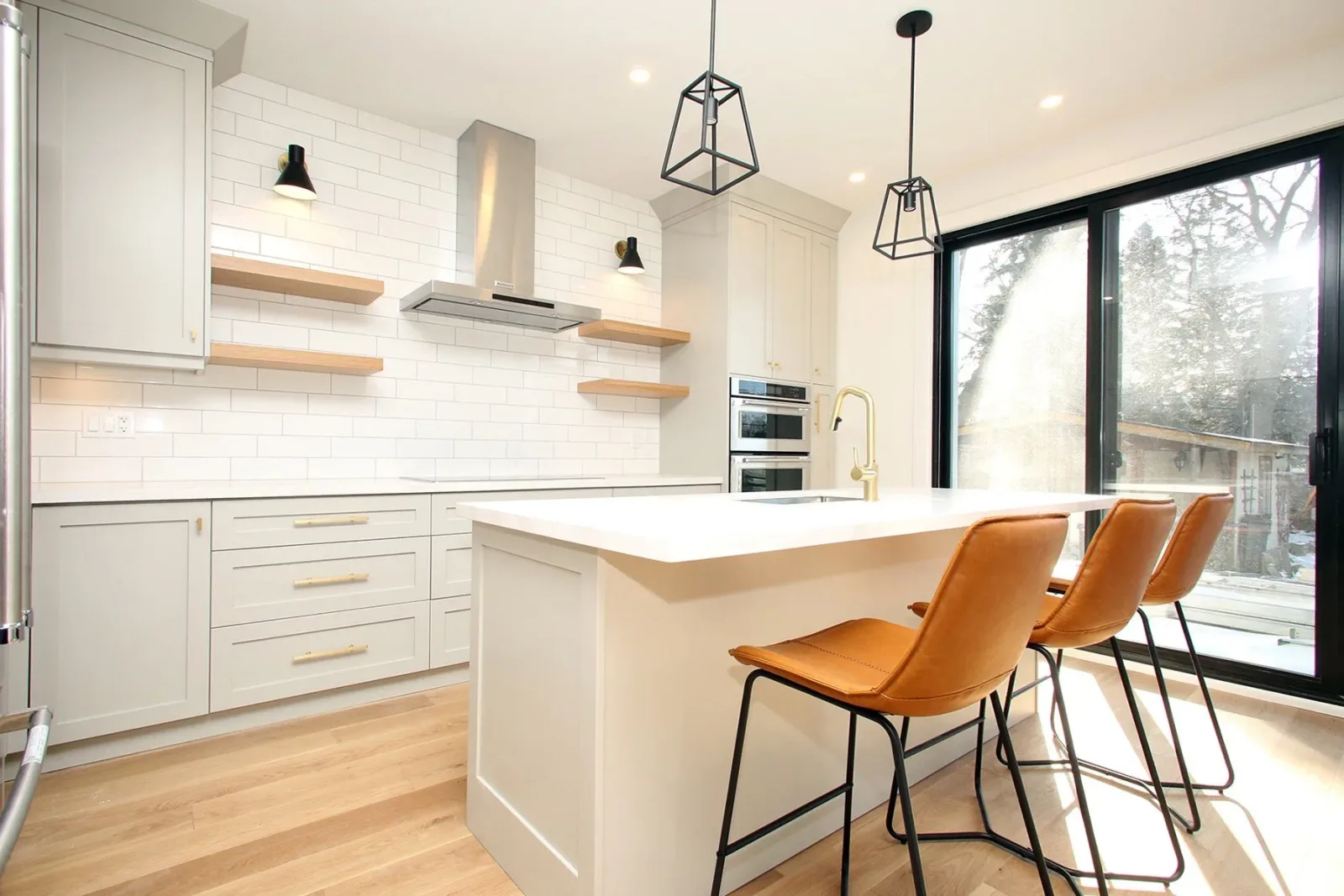
Permit and Engineering Fees
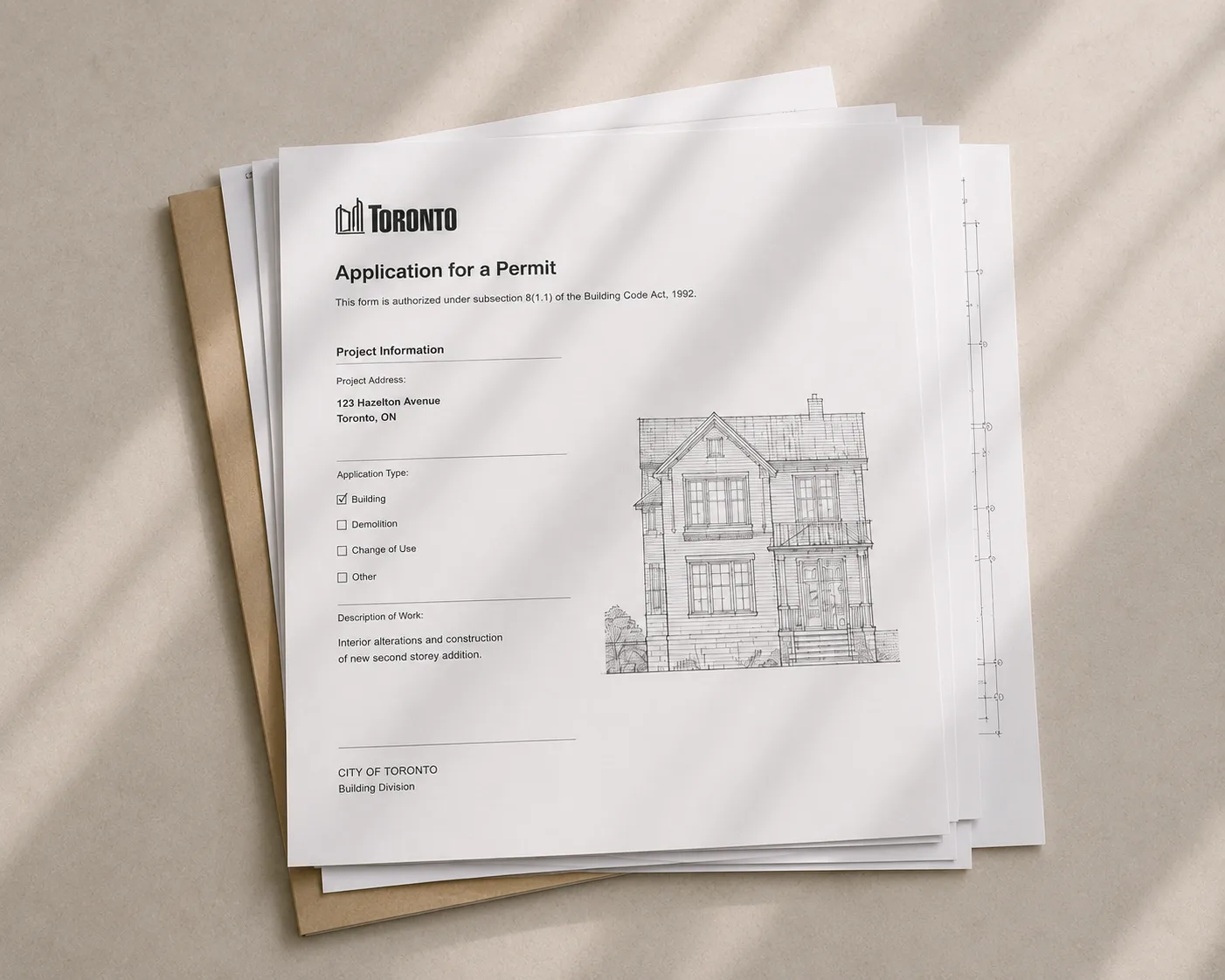
The costs most homeowners forget to plan for are the ones we build into every quote from the start. A Toronto home addition cannot move forward without them.
Architectural and structural engineering
Any addition that touches load-bearing structure, and every second storey does, requires structural drawings prepared by a professional engineer. Engineering fees scale with complexity and are billed separately from construction. Architectural drawings cover layout, elevations, and the permit package.
Building permits
The City of Toronto charges a permit fee based on the square footage of the addition and the scope of structural work. The current rate schedule is published on the City of Toronto Building Permit Fees page and updated each January. Fees are directional and change with city rate updates, but most addition projects fall into a predictable range that we quote up front. Review timelines also vary: a straightforward rear extension often clears faster than a second storey that triggers a Committee of Adjustment hearing.
Committee of Adjustment and variances
If your addition exceeds a zoning limit (height, setback, lot coverage, floor-space index), you need a minor variance from the City of Toronto Committee of Adjustment. Variance applications add fees, notice requirements, and typically two to four months of calendar time. We know which neighbourhoods and which project types are likely to need one before we start design.
Surveys, soil, and arborist reports
A current survey is often required, and some projects need a geotechnical or arborist report if City-regulated trees are nearby. We flag these in the first meeting.
We honour every fee as a line item in your budget. Nothing gets tucked in, nothing gets sprung on you in month three. You see the full cost picture at quote time.
How to Get an Accurate Quote
The only way to get a real number for your home addition is a site visit and a design conversation. Online calculators can get you to a rough order of magnitude, but they cannot tell you whether your foundation can carry a second storey, whether your lot allows the rear extension you want, or whether the kitchen you are imagining fits within a reasonable budget.
Here is what happens when you book a consultation with Waterfront:
1. We listen
Before we measure anything, we ask about your family, how you use the house, what is not working, and what you are trying to achieve. We listen and tailor every detail to your family, because an addition that does not fit how you live is the wrong addition.
2. We walk the house
Our team will assess the existing structure, identify the likely addition type, and flag any zoning, heritage, or site issues up front.
3. We share a directional budget
Based on the scope, the site, and the finish level you want, we give you a realistic budget band so you can decide whether the project is worth taking to detailed design.
4. We run the 4-step process
If the budget works, we move into design, permitting, and build, all under one roof with the same team from start to finish.
The consultation is how we give you a real number instead of a generic range. It is also how we make sure we are the right team for the project. If your goals are not a fit for what we do best, we will tell you that and point you to someone who is a better match.
A home addition is one of the largest investments most families make. You deserve a builder who treats the budget conversation with the same care as the design.
Start with a consultation on our Home Additions in Toronto page, where you can see the full scope of what we build, including rear extensions and side builds. If you know you are going up, head to Second Storey Additions in Toronto for deeper coverage of engineering, permits, and what to expect on a second storey project.
Whichever direction your addition takes, the same team will sit down with you, price the work, and see it through. That is what design-build under one roof actually means.
Related reading
About Waterfront Home Improvements
Waterfront Home Improvements is a design-build practice working in Toronto’s west end. We have spent more than 15 years on Toronto residential projects, with deep concentration in the west end: Roncesvalles, High Park, Swansea, Bloor West Village, The Junction, Etobicoke, and Mimico. Every project moves through our 4-step process under one roof: listen, design, price, build. The same team that scopes the addition prices it, draws it, and stands on site while it is built.
Additions are the most structurally consequential work in our portfolio. Our construction lead handles the structural and engineering coordination, including foundation-capacity assessments, second-storey load reinforcement, and the permit pathway through Toronto Building. Our design lead handles the layout, building-designer drawings, and the interior specification that has to match a renovated main floor. The cost guidance in this article draws on Toronto addition quotes, engineering coordination, and permit timelines from projects we have completed across the west-end neighbourhoods listed above.
Sources
Government and Regulatory • City of Toronto, Building Permit Fees, https://www.toronto.ca/services-payments/building-construction/building-permit/before-you-apply-for-a-building-permit/building-permit-fees/, accessed 2026-04-27. • City of Toronto, Apply for a Building Permit, https://www.toronto.ca/services-payments/building-construction/building-permit/, accessed 2026-04-27. • City of Toronto, Committee of Adjustment, https://www.toronto.ca/city-government/planning-development/committee-of-adjustment/, accessed 2026-04-27. • City of Toronto, Zoning By-law 569-2013, https://www.toronto.ca/city-government/planning-development/zoning-by-law-preliminary-zoning-reviews/, accessed 2026-04-27. • Government of Ontario, Ontario’s Building Code, https://www.ontario.ca/page/ontarios-building-code, accessed 2026-04-27. Industry Associations • Canadian Home Builders’ Association (CHBA), https://www.chba.ca/, accessed 2026-04-27. • Building Industry and Land Development Association (BILD), GTA, https://www.bildgta.ca/, accessed 2026-04-27. Market Data • Statistics Canada, New Housing Price Index, monthly, Table 18-10-0205-01, https://www150.statcan.gc.ca/t1/tbl1/en/tv.action?pid=1810020501, accessed 2026-04-27. • Canada Mortgage and Housing Corporation, Housing Markets, Data and Research, https://www.cmhc-schl.gc.ca/professionals/housing-markets-data-and-research, accessed 2026-04-27. • Houzz Research, https://www.houzz.com/research, accessed 2026-04-27.